
OFF February: A Letter About Digital Life
Why stepping back from social media is an upgrade

Dear Reader, since it’s OFF February, and the Super Connected team have been sent lots of emails asking what it’s all about, I thought I’d write about it here.
Spoiler alert: If you like the idea of a digital Swiss Army knife (or smartphone) — one object that does everything — what follows may not appeal! To manage my life when I’m on the move I deliberately use more than one device. A Swiss Army knife makes perfect sense when you’re in the wilderness, where survival is the default and the possibility of danger is presumed. Digital life seems to have become about being in perpetual Emergency Mode. But I’m not trying to live my everyday life as if I’m lost in the Alps or awaiting attack from lions, tigers and bears.
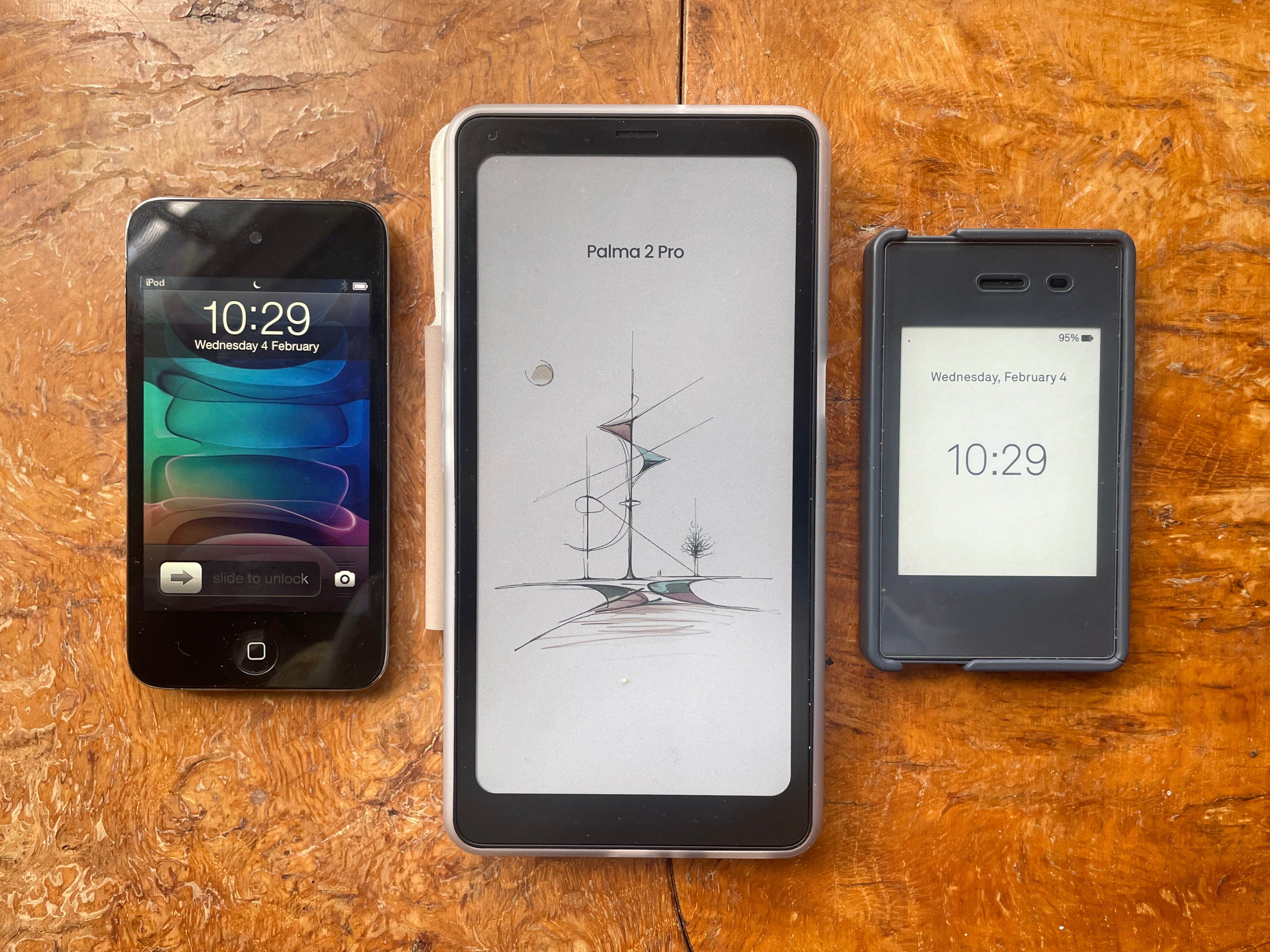
So, when I am not at home, I separate tools: an iPod for music, a Light Phone for calls/texts, and a BOOX Palma 2 Pro for those unavoidable digital travel tickets, and if there is an actual emergency, smart features that can help.
Different tools, different purposes. Survival mode off. Human mode on.
OFF February is about reclaiming time and attention that’s been lost to social media. The idea is simple: for 28 days, remove social media from your phone so it isn’t on your body all the time while you’re living your life. For some people that’s easy. For others, it’s more complicated. So I wanted to share a few of the practical choices I’ve made since stepping away from social media — and from the smartphone — to make that separation actually workable. You can get involved here.
If you’re one of my regular readers, you’ll know I no longer have any social media accounts. That’s a decision I made some time ago, and I’m comfortable with it. But it doesn’t mean I’ve stopped caring about the wider impact of social media on people’s lives. And that’s exactly why OFF February matters — a collective action led by people who understand that stepping back from social media is about restoring autonomy and choice, not moralising or judging.
OFF February is here
This is not about good vs bad. Online vs offline. Smartphones vs no smartphones. That black-and-white framing is the mainstream escape hatch. It lets everyone off the hook. You hear it all the time:
“That’s just how we live now with the internet, isn’t it?”
It’s cheap.
It’s uninformed.
And it avoids responsibility for how we choose to live our digital lives.
I use the internet. I use technology. Pretty much every day. I just don’t use it by default. And I don’t accept the harvesting of my data, the nudging of my behaviour,
the constant requests for feedback, engagement, attention, and money as the unavoidable price of being alive in 2026. I’ve managed to surgically remove that part of the relationship. If you’re curious how, everything below may help.
THIS IS AN UPGRADE, NOT A DOWNGRADE
I often get described as retrogressive because I don’t use a smartphone.
That misunderstands the point.
I’m not downgrading my life.
I’m upgrading it to be more human.
This work always comes back to two areas for me:
1. Divorcing from intrusive Big Tech practices.
2. Protecting mental health, wellbeing, and human autonomy.
Every decision I make about technology asks one question first:
Who is in control here?
Two Types of Readers
This part of the blog is deliberately split in two.
Because people arrive here from very different places.
1. For those who want to disentangle — completely
You already know something isn’t right.
The subscriptions. The notifications. The feedback loops. The sense of being constantly “on”. You want out. Or at least less in. I understand that completely.
That’s the road I’ve been on for years. And yes — it’s possible.
Not by banning technology.
But by choosing tools that don’t treat you as the product or fuel for the platforms.
2. For the curious
Not convinced. Not radical. Just wondering what another way might feel like?
This is often the most powerful place to begin.
The single most helpful thing I did to begin a less digital life?
Using devices occasionally that simply cannot pull me into the internet.
You don’t need to make a life decision, Just try it occasionally as an experiment.
A Simple Experiment for the Curious
I use three mobile devices to cover the same needs that many people cover with a smartphone. I very rarely carry all three at once. Each device has a specific purpose, and below I explain how I use each of them.
Music
At the gym, I use an old iPod touch.
Yes — technically it could connect to the internet.
But the operating system is so out of date that it basically doesn’t.
What it does do is play music from my iTunes library.
That’s it.
No tunnels.
No wandering.
No “while I’m here I’ll just check…”
They’re easy to find second-hand. Around £25-30. Especially useful for children when you want them to have music without a direct route into the world-wide web, or anything else that might take your child’s attention away from…the music.
For me, 90% of the music I listen to while travelling is still on an old iPod Classic.
Sure - if you do not have a music library of mp3s, this could be a challenge - or you do have a library but have forgotten how to manage it, this is also a challenge. I had to relearn it. Apple Music (the app) is not streamlined for people who have their own music library anymore. But once I learnt that Apple had continued to support those of us who still own our own music ‘files’, I have never turned back. Because music is a relationship. With just two of us in it. No passwords, no subscriptions, no 2-factor authentications, no iCloud ID and definitely no phone calls. Oh, and no ads either. Just me. And music. For me, it was worth the hassle of relearning how to use my Mac, my music library and an iPod. This isn’t anti-streaming. Streaming has it’s place, but as everyone knows, it doesn’t support the music makers and it trains fans of music to skip past songs, rather than experience them. Research shows that about 50% of listeners skip a song before it ends, and 24% skip within the first five seconds.
Streaming is not a music listener’s medium. It’s a music browser’s medium.
The Phone That Changed Everything For Me: The Light Phone
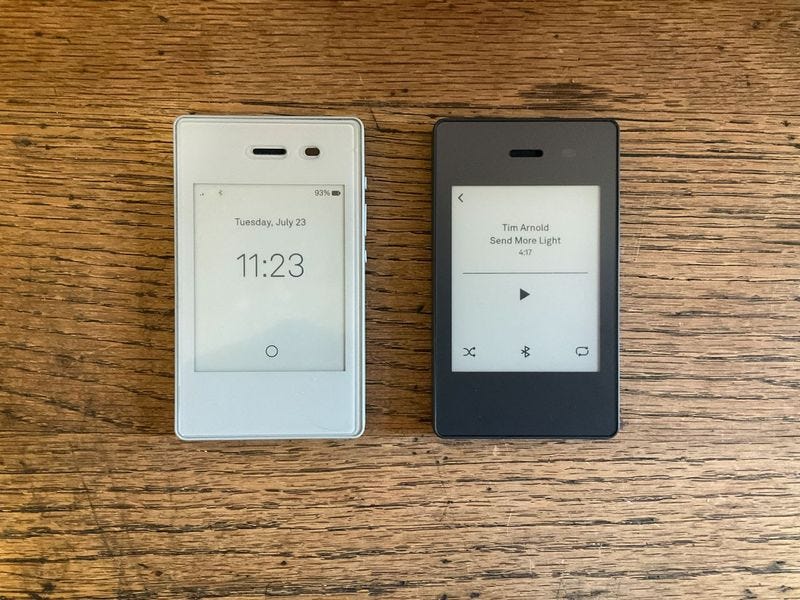
Before going into Light Phone, it’s important to clear up a common misconception.
Choosing not to use a smartphone is often framed as going backwards. In fact, devices like the Light Phone are more future-facing than standard smartphones. The Light Phone belongs to a next phase of design, while smartphones remain locked in early-21st-century paradigms where unintentional use of attention is a norm.
A phone that can pass an internet connection on to a serious tool like a laptop or desktop computer — while preventing you from going online on the actual phone— reflects a more mature idea of what future humans might value: presence, intention, and care for one another’s relationships.
Smartphones optimise for capture; the Light Phone optimises for autonomy. You could say — and I will — that I use a device that harnesses the digital realm to empower the human, rather than using the digital realm to put the human in a harness. It may sound utopian. But if it comes down to a choice, I’ll take utopian over dystopian any day. I think we’ve all had enough of dystopia by now.
Some of this blog was dictated on my Light Phone. Not typed. Because I don’t enjoy typing on screens much anymore. The Light Phone lets me speak messages easily. But here’s the crucial part:
It has no way to allow me to access the internet on the device itself.
If someone texts me a link — from a friend, a utilities company, anyone —
I can’t click it. Instead, the Light Phone recognises it’s a link and forwards it to my email address (which it knows because it belongs to my Light Phone account).
So later, when I’m at a laptop or desktop, when I’m intentional and focused,
I deal with it properly with focus.
That boundary alone has changed my nervous system for the better. The Light Phone isn’t a dumb phone or a smart phone. It’s a human-first phone.
But what about trains, planes, the Underground — and the ticketed world of cinema and theatre?
I don’t print all my travel tickets anymore. I also don’t pull a laptop out every time I have to present my train/plane ticket. I use a small handheld device that looks like a smartphone but crucially is not a phone. It’s an e-reader. The Palma 2 Pro (by Boox)
It holds travel apps. Banking. Weather. Tickets. And can use a Data SIM.
Yes — it could browse the internet. But that’s not what it’s for. For me it’s a tool. Not a window. And because it cannot ring, there is no interruption when I’m using it.
I don’t cope well using a tool while being called or messaged through the same object.
That may be autism. It may be ADHD. But honestly — I think it’s just human.
If you picked up a hammer to put some nails in the wall to hang a picture and it started vibrating with messages on your wrist, you’d probably drop it. Worse still, can you imagine using a screwdriver and just as you begin, it jumps out of your hand and says you can’t use it until you’ve given it an update?
I love people who love smartphones. But it doesn’t really wash anymore to defend smartphones by saying “It’s just a tool'’. My tools don’t need constant updates.
The Palma 2 Pro is fantastic if you have really important online information regarding health, banking or travel. Since I also have some health issues with my eyes, the E-Ink is like heaven for me. As with the Light Phone, my eyes are getting used to not having a light beaming into them all the time by using the Palma 2 Pro.
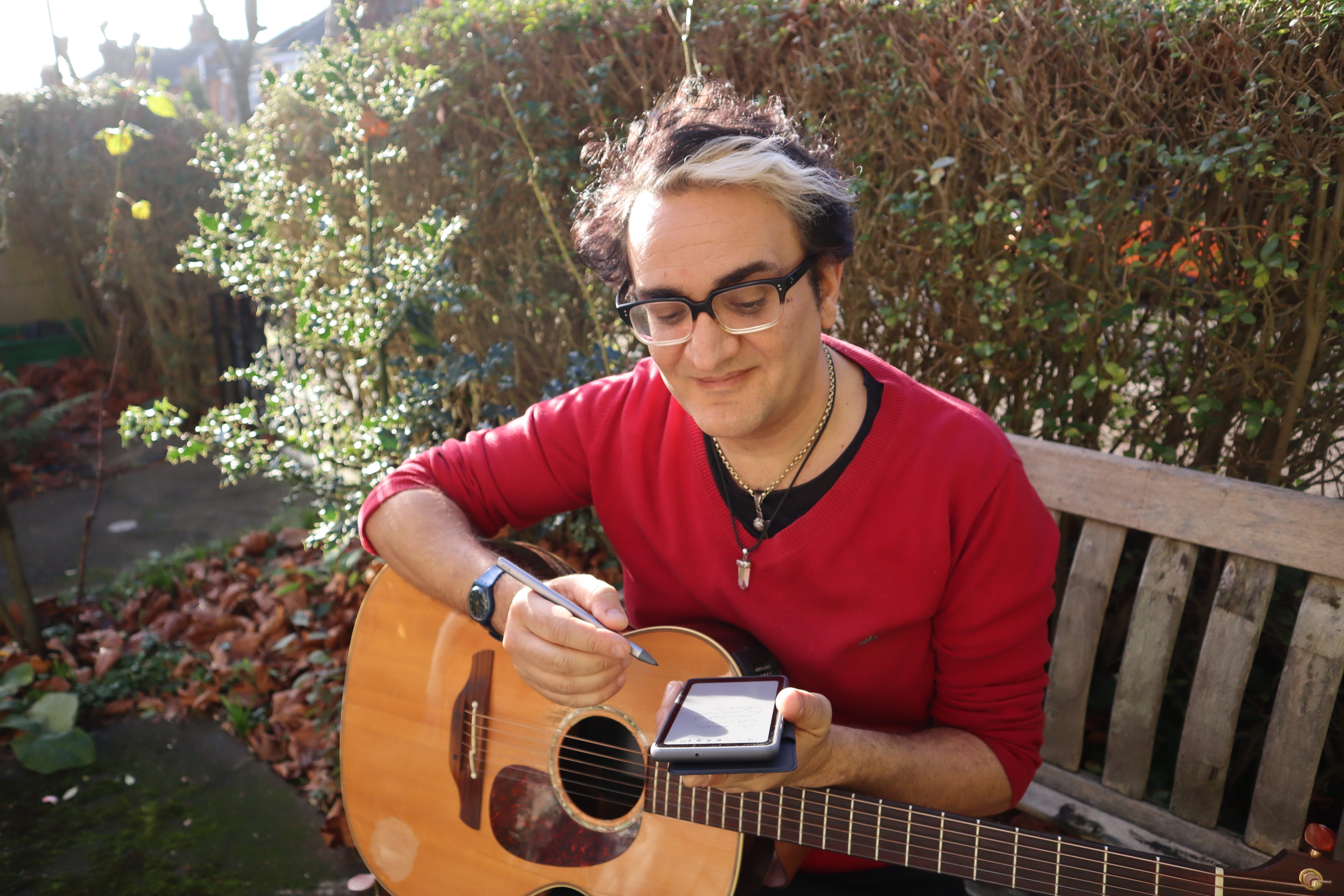
I also use it to write notes if I am recording on location as it has a stylus too. It’s more more versatile than I need it to be and it’s not something I keep in my pocket. But if I’ve left the house, it’s usually in my bag and anything that can’t be done with my Light Phone or my iPod, can usually be done on the Palma.
About Bans, Australia and Under-16s
I get asked this a lot.
Do I support bans on social media for under-16s?
That question is too binary.
Here’s my honest answer:
For years, educators and health professionals have asked Big Tech to build better protections for children. They were ignored. When bad actors refuse to modify antisocial behaviour, strategic action becomes necessary.
Is a ban the final solution? No.
Is it a negotiating tactic? Yes — and an important one.
Because the evidence has been clear for some time now: Young brains are still developing. They are creating neural pathways that will be used for the rest of that person’s life. And addictive algorithms are interfering with that process. Parliament has heard this repeatedly for the last 18 months.
I don’t believe in banning things as ideology.
But I do believe in boundaries when care has been consistently refused.
And I also believe that like alcohol, ‘current’ social media is a drug for adults.
I said ‘current’. Because I believe a social media that is not toxic and does not contaminate is possible. It just hasn’t been built yet.
Adults have the right to choose how they use their brains, but for younger developing minds, the current social media norms of engagement are like introducing an invasive species of parasites into a growing garden — something fast-spreading, attention-hungry, and wholly indifferent to what it crowds out. The roots in that garden are still forming, the structure still delicate, and the conditions matter.
What grows there is shaped not by choice, but by exposure.
Going Underground
I was on the Tube the other day, reading a book.
Across from me: a toddler in a buggy with their mum.
Around them: eight people on smartphones opposite, seven more beside me.
What does that toddler learn?
They learn what normal looks like.
Before the age of seven, what children see becomes acceptable. It becomes default.
That early years window is sacred.
So if, just for OFF February, you’re near a young child and feel the urge to reach for your phone — Try not to. That single act costs nothing. Requires no campaign.
But it goes a log way to reshaping future humans.
We are all influencers when it comes to the youngest.
A Final Note
I’m still not online very much.
Certainly not in spaces built around comments, likes, feeds, or constant engagement.
This letter is being delivered by my team to those on my Substack and mailing list
because I wanted to say these things plainly.
You’ll find a Digital Wellbeing section on the Super Connected website, with resources for families and parents.
And our Super Connected Boost exists to remind us of something simple:
Dopamine, serotonin, and oxytocin are not only available to download!
If OFF February does one thing, I hope it helps us reclaim more time to be with each other in real time and in real spaces.
Not by going backwards.
But by moving forward — carefully, human-first, and together.
Tim Arnold, 4th February 2026
Tim Arnold is an independent UK musician, composer and cultural commentator whose work spans over 30 years and 30+ albums, alongside film, theatre and multimedia performance. As an autistic artist, his practice centres on human-scale creativity, digital wellbeing, and making digital and non-digital modes of engagement a genuine choice. He is best known for Super Connected, a long-form artistic project examining the impact of Big Tech on families, creativity and mental health.
This post is not sponsored; if you’d like to support Tim’s work, please join his Patreon.
Learn more about The OFF Movement